
Importing products from overseas always comes with risks. You place an order, wait weeks for shipping, and then open the container only to find damaged or poor-quality goods. This is a nightmare for any buyer. It wastes your money and damages your brand’s reputation. To stop this from happening, you need a strict plan before the goods ever leave the factory.
A quality control checklist for eco-friendly food service products is a list of tests and standards used to verify the goods before shipment. It must cover four main areas: verifying raw material certifications (like BPI or OK Compost), testing functional performance (water and oil resistance), inspecting visual quality (defects and cleanliness), and checking packaging strength (drop tests) to ensure safe delivery.
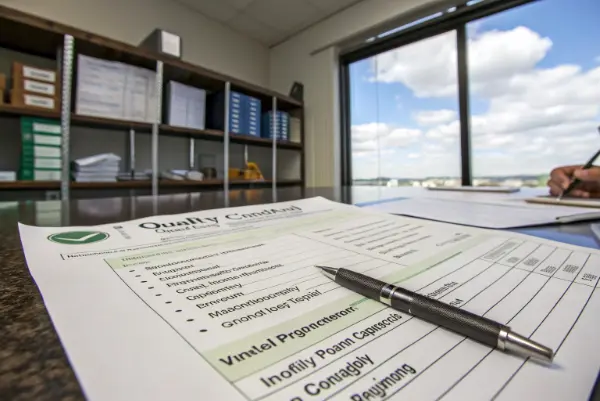
Having a list is good, but knowing exactly how to use it is better. I have seen many companies fail because they did not check the small details. Let’s look at the specific steps you need to take to protect your business.
How Do You Verify the Authenticity of Raw Materials?
Many factories claim their products are "100% biodegradable" or "compostable," but some are not telling the whole truth. If you sell a product that contains hidden plastic, your company could face legal trouble. You need to be sure that what you are buying is actually eco-friendly.
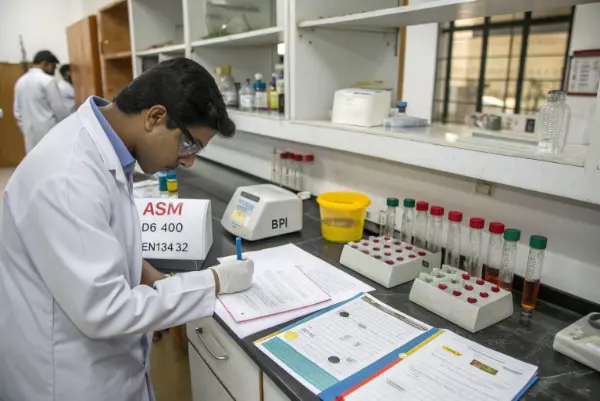
To verify raw materials, you must demand up-to-date certificates like ASTM D6400, EN13432, or BPI licensing that matches the specific factory name. You should also perform simple physical tests, such as a burn test or a solvent test, to see if the material behaves like plant fiber or PLA, rather than traditional plastic.
Dive Deeper: Ensuring Material Compliance
In my years at Ecosourcecn, I have learned that paperwork is the first line of defense, but it is not the only one. When you are sourcing products like PLA (Polylactic Acid) cutlery or bagasse (sugarcane fiber) plates, the material is everything. If the material is wrong, the product is useless to an eco-conscious buyer like you.
First, you must look at the certificates. Do not just look at the logo on the box. Ask for the full test report. You need to check the validity date. Certificates expire. You also need to check the holder’s name. Does it match the factory you are paying? Sometimes, a factory will show you a certificate from a material supplier, not their own finished product. This is a red flag. The finished product needs to be certified too.
Second, we use critical thinking to test the physical items. We often do a "Burn Test" in our own lab.
- PLA: When you burn PLA, it smells like burnt sugar. It has a calm flame.
- Plastic (PP/PS): Traditional plastic smells like sharp chemicals and produces black smoke.
- Bagasse: This should burn like paper or wood, leaving white or gray ash.
You can also use a solvent test for PLA. PLA will dissolve or get sticky in certain chemicals where plastic will not. These tests are simple, but they tell you a lot.
Here is a breakdown of what documents you need for different materials:
| Material Type | Required Standard | Key Certificate Bodies | What to Check |
|---|---|---|---|
| PLA / CPLA | ASTM D6400 / EN13432 | BPI, DIN CERTCO, OK Compost | Verify the max thickness allowed for composting. |
| Bagasse (Sugarcane) | FDA / LFGB (Food Safety) | SGS, TUV, Intertek | Check for heavy metals and fluorine (PFAS) levels. |
| Kraft Paper | FSC (Forest Stewardship) | FSC Council | Ensure the FSC code is valid and traceable. |
By being strict with these checks, you filter out bad suppliers immediately. We always make sure these documents are ready before we even move to production.
Will the Products Hold Up Under Real-World Conditions?
Your customers do not care about certificates if the plate falls apart when they put hot food on it. A common issue with bio-based products is that they can be too soft or leak. You must test the products to make sure they work exactly as they should.
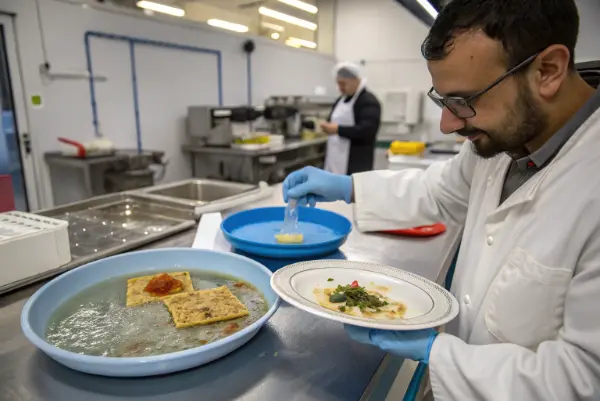
Functional testing involves subjecting the products to hot water (100°C) and hot oil (120°C) for at least 30 minutes to check for leaks or deformation. You must also test the load-bearing capacity to ensure the plate does not collapse when held with one hand while full of food.
Dive Deeper: Stress Testing for Usability
I remember a client who bought a container of bagasse bowls from a different supplier. They looked great, but the moment hot soup was poured in, the bottom turned into mush. This happened because the factory did not control the moisture or the additives correctly. To avoid this, we simulate the worst-case scenarios.
We do not just look at the product; we use it. For bagasse products, the most critical test is the oil and water resistance test.
- Water Test: We pour boiling water (100°C) into the container. We let it sit for 30 minutes. Then, we look at the bottom. Is it wet? Is it leaking? A little bit of "sweating" (dampness) might be okay for short-term use, but actual drops of water are a fail.
- Oil Test: We use hot vegetable oil heated to 120°C. Oil is more aggressive than water. It penetrates the fibers faster. If the oil soaks through, the plate is defective.
For cutlery (forks, knives, spoons), the test is different. We test the strength. We bend the handle. If it snaps too easily, it is dangerous. We also use the knife to cut something hard, like an apple or cooked meat. If the teeth break off, that is a major safety hazard.
We also need to consider microwaves and freezers.
- Microwave: Does the product warp or release a bad smell when heated?
- Freezer: Does the product become brittle and crack when frozen?
Here is how we structure our functional tests:
| Test Name | Procedure | Passing Criteria | Common Failure |
|---|---|---|---|
| Water Resistance | 100°C water for 30 mins | No leakage, no soft bottom | Soaking through, table gets wet |
| Oil Resistance | 120°C oil for 30 mins | No leakage, no grease spots | Grease stains on the bottom |
| Rigidity | Hold filled plate with one hand | Plate maintains shape | Collapsing / Folding |
| Microwave Test | High power for 3 mins | No deformation, no smell | Melting / Warping |
These tests ensure that when your customer uses the product, they have a good experience. Quality is not just about looks; it is about function.
Are There Visible Defects That Affect Usability?
Even if the material is real and the plate holds water, it cannot look dirty or broken. Eco-friendly products are often sold at a premium price. Customers expect them to look clean and professional. Visual defects ruin the perception of value.
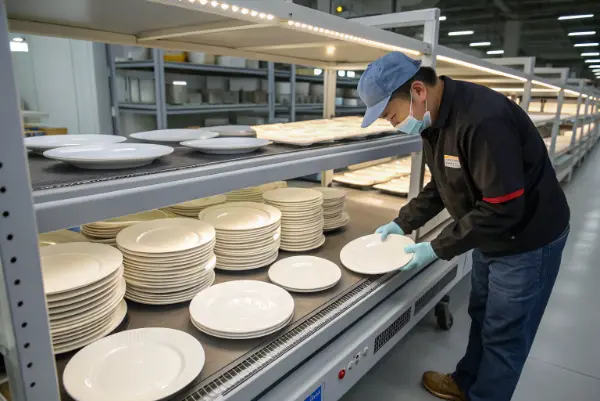
Visual inspection requires checking a random sample of products for issues like dirt spots, sharp edges, warping, or uneven color. You should use a standard defect list (AQL) to decide if the batch is acceptable, rejecting lots that have too many critical or major defects.
Dive Deeper: The Visual Quality Standard
When we inspect goods, we use our eyes and our hands. We follow a system called AQL (Acceptable Quality Limit). This means we do not inspect every single item (which would take too long), but we inspect enough random boxes to know the quality of the whole shipment.
For eco-friendly products, the defects are different from plastic. Since we use natural materials, some variation is normal. But there is a line between "natural look" and "defect."
Common Defects in Bagasse (Molded Fiber):
- Burrs and Flashing: This is extra material on the edge of the plate. It happens when the mold is old. It looks bad and feels rough on the lips.
- Dirt/Dark Spots: Since raw bagasse is a plant, sometimes bits of bark get in. A tiny speck might be okay, but a big black spot looks like a fly or dirt. This is a hygiene concern for food packaging.
- Color Variation: One plate is white, the other is yellow. This shows the factory has poor process control.
- Warping: The plate is not flat. It wobbles on the table. This happens if the drying process was uneven.
Common Defects in PLA/CPLA Cutlery:
- Flow Marks: Wavy lines on the surface of the spoon.
- Short Shots: The mold was not filled completely, so the tip of the fork is missing.
- Sharp Edges: The handle is sharp and can cut the user’s hand.
We categorize these defects into three types:
- Critical: Dangerous to use (sharp edges, hair, insects). Tolerance: 0%.
- Major: Affects function or looks very bad (leaking, big dirt spots). Tolerance: 2.5%.
- Minor: Small cosmetic issues (tiny scratch). Tolerance: 4.0%.
By using this structured approach, we remove the "opinion" from the inspection. It is either pass or fail based on the data. This helps us hold the factory accountable.
Can the Packaging Protect the Goods During Transit?
You can have the perfect product, but if the boxes are weak, the goods will arrive crushed. Eco-friendly products are often heavier or more brittle than plastic. They need strong protection. Shipping from China to Canada or Europe takes a long time and involves rough handling.
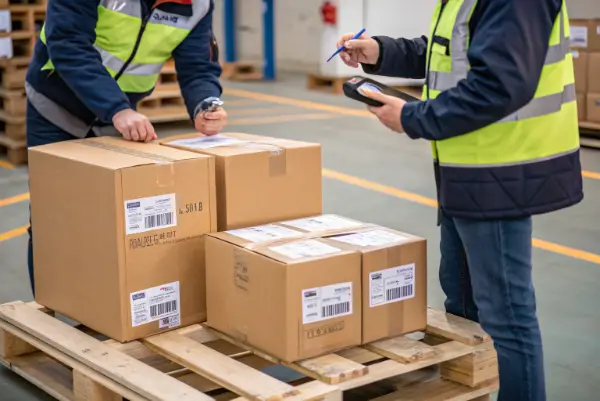
Packaging inspection involves checking the carton thickness (usually 5-ply), verifying correct barcode labeling for retail, and performing a drop test from a specific height to ensure the products inside do not break when the box is thrown or dropped.
Dive Deeper: Logistics and Safety
I have seen containers opened where the bottom row of boxes was completely crushed by the weight of the boxes on top. This happens because the cardboard was too thin or the warehouse was too humid. Cardboard loses strength when it gets damp.
To prevent this, we check the Master Carton.
We insist on at least a 5-layer (double wall) corrugated carton. For very heavy items, we might ask for 7 layers. We measure the thickness with a caliper. We also check the "Bursting Strength" rating printed on the box.
The Drop Test:
This is the most fun but most important part. We pack the box fully. Then, we lift it to a height of roughly 76cm (depending on weight). We drop it on the floor.
We drop it 10 times:
- On the most fragile corner (usually the bottom corner).
- On the edges connected to that corner.
- On the flat faces (top, bottom, sides).
After the drops, we open the box. If the product inside is broken or the inner plastic bag has burst, the test fails. The factory must improve the packaging before we allow them to ship.
Labeling and Palletization:
We also check the markings. Are the barcodes scannable? Is the "Made in China" label present (required by customs)? Is the "Best Before" date printed clearly? If you use pallets, we check that the boxes do not overhang the pallet edge. Overhanging boxes get smashed by forklifts.
Here is a checklist for the packaging phase:
| Check Item | Requirement | Why it Matters |
|---|---|---|
| Carton Material | 5-ply (K=K standard) | Prevents crushing in the stack. |
| Inner Bag | Food grade, sealed properly | Protects from dust and moisture. |
| Drop Test | ISTA 1A Standard | Simulates rough handling by couriers. |
| Humidity | Check container moisture | Prevents mold growth during ocean freight. |
| Markings | Correct SKU, Barcode, Qty | Ensures accurate inventory at your warehouse. |
Shipping is the final step. We ensure that all the hard work of production is not wasted in the last mile.
Conclusion
Quality control is not just about finding mistakes; it is about preventing them. By strictly checking raw materials, testing function, inspecting for visual defects, and verifying packaging, you ensure that your eco-friendly products arrive safely and perform well. This process protects your investment and builds trust with your customers. At Ecosourcecn, we treat every shipment like it is our own, so you can focus on growing your business.

