
Are you investing in sustainable packaging but struggling to see a return in customer loyalty? It’s a common problem. Your commitment to the planet feels invisible, and your eco-friendly choices aren’t translating into a stronger brand identity. You need a way to turn those good intentions into a clear, compelling message that resonates with your customers.
Building a green brand identity for your beverage shop involves more than just using eco-friendly products. You must actively market these choices. This means communicating your sustainable mission through your packaging design, in-store signage, social media content, and staff training. By making your eco-efforts a visible and central part of your customer experience, you transform a cost into a powerful branding tool that attracts and retains conscious consumers.
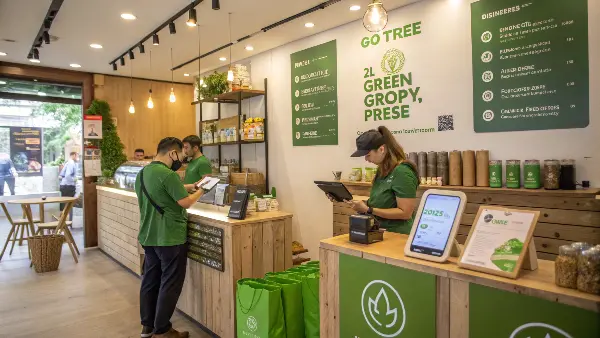
I’ve worked with countless partners who’ve made the switch to sustainable materials. They often believe the products will speak for themselves. The truth is, that’s only half the battle. Your customers are busy, and you need to connect the dots for them. This guide will walk you through the practical strategies we’ve seen work time and time again, helping you build a brand that’s not just green in practice, but also in perception. Let’s get started.
How Can Your Choice of Eco-Friendly Packaging Define Your Brand?
You’ve decided to use sustainable materials, but choosing between PLA, bagasse, or kraft paper feels overwhelming. Each option sends a different message, and the wrong choice might not align with your brand’s image or operational needs. This confusion can lead to using packaging that doesn’t effectively tell your story, missing a key branding opportunity.
Your packaging is often the first physical interaction a customer has with your brand. Choosing materials like PLA for its clear, modern look signals innovation. Opting for bagasse or kraft paper conveys a rustic, natural, and earthy feel. The key is to select a material that visually and functionally aligns with your brand’s core identity, turning your cups and containers into silent storytellers for your eco-commitment.
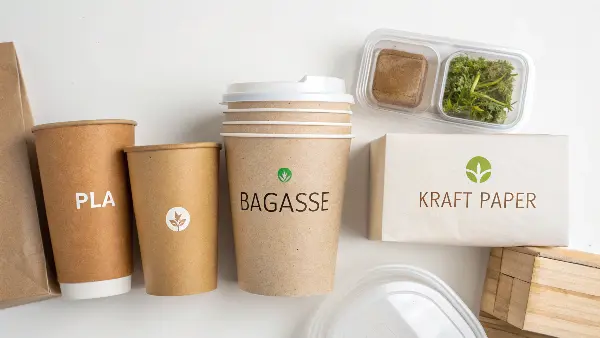
Your packaging isn’t just a container; it’s a statement. As a sourcing expert, I always advise clients like Jacky, a packaging specialist in Canada, to think beyond just "eco-friendly." We need to consider the entire brand experience. A sleek, modern smoothie bar might choose crystal-clear PLA cups to showcase their vibrant drinks. A cozy, artisanal coffee shop, on the other hand, might prefer the warm, tactile feel of kraft paper sleeves and bagasse lids. These choices matter because they build an immediate, non-verbal connection with your customer.
Aligning Materials with Your Brand’s Vibe
Think about your shop’s personality. Are you high-tech and minimalist or warm and traditional? This should guide your material selection. We can break it down to make the decision clearer.
- PLA (Polylactic Acid): Best for cold drinks. It’s transparent, so it’s perfect for showing off colorful juices, smoothies, or iced coffees. It projects a clean, modern, and forward-thinking image.
- Bagasse (Sugarcane Pulp): Great for lids, plates, and food containers. It’s sturdy, off-white, and has a natural texture. This material screams "earthy," "organic," and "all-natural."
- Kraft Paper: Ideal for hot cup sleeves, bags, and food wraps. Its classic brown look is instantly recognizable as eco-conscious and communicates a rustic, honest, and handmade feel.
Here’s a simple comparison to help you choose:
| Material | Best For | Brand Vibe | Key Message |
|---|---|---|---|
| PLA | Cold Drinks, Clear Lids | Modern, Clean, Innovative | "We are the future of sustainability." |
| Bagasse | Hot Lids, Food Bowls | Natural, Organic, Earthy | "We are committed to natural ingredients." |
| Kraft Paper | Sleeves, Bags, Wraps | Rustic, Artisanal, Authentic | "We are simple, honest, and reliable." |
Choosing the right material ensures your packaging does more than just hold a drink—it reinforces who you are.
How Do You Communicate Your Sustainability Efforts to Customers In-Store?
You have the perfect eco-friendly cups and straws, but customers are still asking if you recycle. This means your message isn’t landing. They are missing the story right in front of them, and your investment in sustainability is not building the brand loyalty you hoped for. It’s a missed connection that costs you more than just money.
Communicate your eco-efforts in-store using clear, simple, and visual cues at key touchpoints. Use small signs at the point of sale, print messages directly on your cups, and create a dedicated "sustainability corner." Also, ensure your staff can confidently explain your green initiatives, turning every transaction into an opportunity to reinforce your brand’s values.
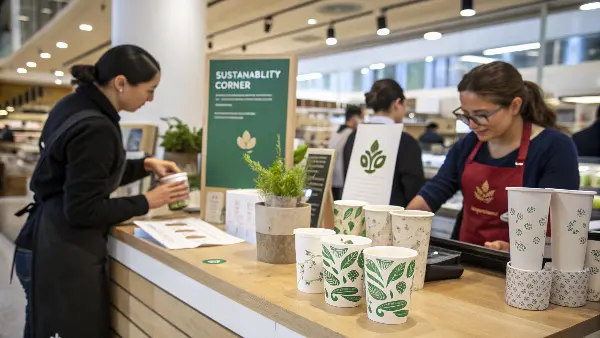
Your physical store is your most powerful marketing tool. It’s where your customers experience your brand firsthand. Don’t make them guess about your commitment. I remember a client who switched to compostable PLA cups but saw no change in customer perception. The problem was, the cups looked like plastic. Once they added a small, well-designed sign on the counter that said, "Our cups are made from plants, not plastic. Please compost," everything changed. Customers started conversations, and the staff felt proud. Your communication needs to be just as intentional as your product choices.
Making Your Green Mission Visible
You need to integrate your message into the customer’s journey through your store. The goal is to inform without overwhelming. Here are the key areas to focus on.
1. Point-of-Sale Signage
This is prime real estate. A small, well-designed sign or a sentence on your menu can make a huge impact. Keep it short and sweet.
- Example: "Sip Sustainably! All our packaging is 100% commercially compostable."
- Example: "Your drink is served in a cup made from plants."
2. Custom Branded Packaging
Print your message directly on your products. This takes your story home with the customer. I often work with brands to add a simple icon or a short line of text to their custom-printed cups and sleeves. This is something Jacky, my Canadian client, does very effectively.
- "I’m a compostable cup."
- "Made from plants."
- Include a small leaf or recycling symbol (make sure it’s the correct one for compostability, like the BPI logo).
3. Empower Your Team
Your baristas are your brand ambassadors. They should be your most knowledgeable advocates.
- Training: Give them a one-sheet with simple talking points. They don’t need to be material scientists, but they should be able to answer, "What does compostable mean?"
- Role-play: Practice answering common customer questions. A confident answer builds trust. An "I don’t know" breaks it.
By using these three channels—signage, packaging, and people—you create a consistent and powerful message that turns your physical space into a testament to your green mission.
What Digital Marketing Tactics Amplify Your Green Message?
Your in-store customers love your green mission, but your online presence doesn’t reflect it. Your social media is just pictures of drinks, and your website barely mentions your eco-friendly practices. This creates a disconnect and fails to attract the growing number of consumers who actively seek out sustainable businesses online.
Amplify your green message online by making sustainability a core pillar of your content strategy. Share behind-the-scenes stories of your sourcing process on social media, write a dedicated "Our Mission" page on your website, and collaborate with local green influencers. Use clear visuals and transparent language to show, not just tell, your commitment to the planet, engaging a wider, value-driven audience.
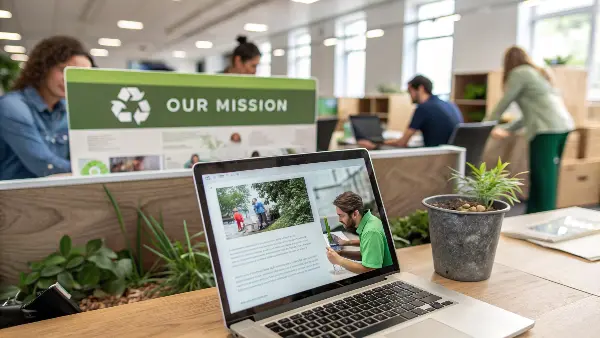
In today’s world, your digital storefront is just as important as your physical one. Your online presence is where new customers discover you and where existing customers build a deeper connection with your brand. Simply stating you’re "eco-friendly" in your Instagram bio isn’t enough. You need to bring your sustainability story to life. I encourage my partners to think like storytellers. Document the journey—why did you choose these specific materials? How do you dispose of waste responsibly? These narratives are powerful marketing assets.
Weaving Sustainability into Your Digital Story
A successful digital strategy doesn’t just mention your green credentials; it celebrates them. It makes your customers feel like they are part of a positive movement every time they buy from you.
1. Social Media Storytelling
Your social channels are perfect for bite-sized, visual stories.
- Instagram/TikTok: Create short videos showing your compostable cups breaking down in a compost pile (if you have access to one). Make a Reel explaining the difference between your PLA and bagasse packaging. Feature a "Sustainable Supplier of the Month."
- Content Pillars: Make "Sustainability" one of your 3-4 main content pillars, alongside "Our Drinks" and "Community." This ensures you are consistently talking about it.
2. Your Website as a Knowledge Hub
Your website is where you can go deeper. It’s where a curious customer or a B2B partner (like Jacky!) goes for detailed information.
- Dedicated Sustainability Page: Create a page titled "Our Green Promise" or "Sustainability." Detail the materials you use (mentioning PLA, bagasse, etc.), any certifications you have (like BPI), and your waste management process. This builds transparency and authority.
- Blog Posts: Write articles that add value. For example, "What’s the Difference Between Biodegradable and Compostable?" or "How We’re Reducing Our Carbon Footprint." This positions you as an expert and improves your SEO.
3. Email Marketing & Loyalty Programs
Use your direct line to your most loyal customers to reinforce your shared values.
- Newsletter: Include a small section in every newsletter about your sustainability efforts—a new initiative, a milestone reached, or a tip for your customers on how to compost their cups.
- Loyalty Rewards: Offer a bonus point to customers who bring their own reusable cups. This actively involves them in your mission.
By consistently weaving your eco-story into your digital marketing, you build a brand that is known for its values, attracting customers who care about more than just a good drink.
Conclusion
Building a green brand identity is an active process. It starts with choosing the right materials but succeeds through clear, consistent communication. By integrating your sustainable mission into your packaging, your store’s atmosphere, and your digital presence, you turn an ethical choice into your most powerful marketing advantage, creating a brand that customers are proud to support.

