
Are you struggling with the high costs and environmental impact of traditional food packaging? The linear "take-make-dispose" model is becoming unsustainable, facing pressure from both regulators and consumers. Businesses that don’t adapt risk falling behind. Embracing a circular economy offers a path to long-term growth, resilience, and a stronger brand identity.
A circular economy for food packaging redesigns the entire system to eliminate waste and keep materials in use. Instead of a linear path to the landfill, it creates closed loops through strategies like designing for recyclability, using compostable materials like PLA and bagasse, and promoting reusable packaging systems. Adopting this model helps businesses reduce material costs, meet sustainability regulations, enhance brand reputation, and connect with environmentally conscious customers who demand greener solutions.
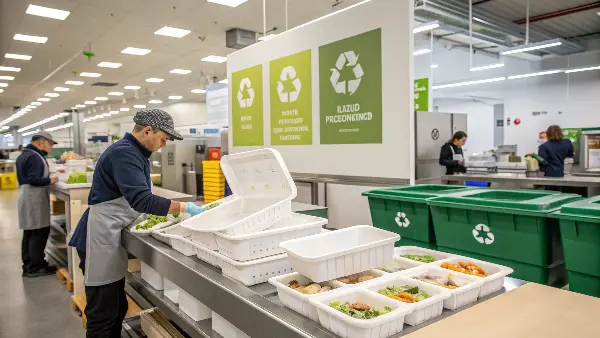
Transitioning to a circular model might seem like a huge task. I get it. When I first started exploring this for my clients, the amount of information was overwhelming. It’s more than just switching materials; it’s about rethinking the entire lifecycle of your packaging. But the journey is worth it, and it starts with understanding the foundational concepts and how to apply them practically. Let’s break down how you can make this powerful shift work for your business.
What are the core principles of a circular economy for packaging?
Does all the jargon around "sustainability" leave you feeling confused? It’s easy to get lost in terms like "eco-friendly" and "green," but without a clear framework, these words can lead to ineffective strategies or even greenwashing. You need a solid foundation to build a truly impactful plan that aligns with global standards.
The circular economy for packaging is built on three core principles. First, design out waste and pollution from the very beginning. Second, keep products and materials in continuous use at their highest value. Third, regenerate natural systems by returning biological nutrients to the earth. These principles guide every decision, from material selection to end-of-life management, creating a truly sustainable system.
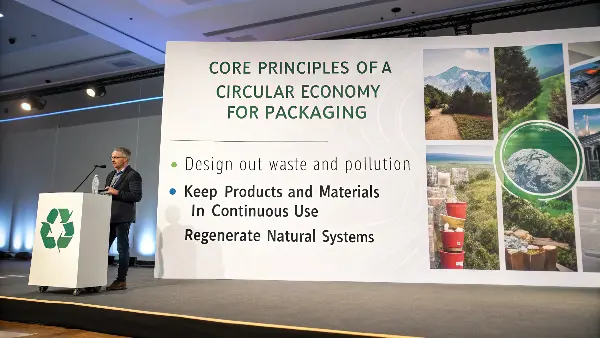
To really make this work, we have to move beyond just theory. I always advise my clients to look at these principles as an active checklist for their packaging strategy. It’s about a fundamental shift in mindset from a linear ‘take-make-dispose’ model to a cyclical one where resources are valued and preserved. This isn’t just an environmental goal; it’s a powerful business strategy that builds resilience and brand trust. Let’s look at how each principle applies in the real world.
Principle 1: Design Out Waste and Pollution
This is the most proactive step. Waste isn’t an accident; it’s a result of design choices. In packaging, this means thinking about the end-of-life right at the start. For example, using monomaterials (packaging made from a single type of material) makes recycling far easier than using complex mixed materials. It also involves avoiding harmful chemicals, inks, and adhesives that can contaminate the recycling stream or the environment. When we design packaging for easy disassembly and sorting, we set it up for a successful second life.
Principle 2: Keep Products and Materials in Use
This principle has two main pathways: technical and biological.
- Technical Cycle: This applies to materials like glass, metal, and certain plastics. The goal is to keep them in circulation through reuse, repair, and high-quality recycling. A refillable container program is a perfect example of reuse.
- Biological Cycle: This applies to materials like bagasse, PLA, or paper. These materials can be safely returned to the earth through composting, where they break down and become nutrients for new growth.
Principle 3: Regenerate Natural Systems
This is where compostable and biodegradable materials truly shine. By choosing materials derived from renewable resources like sugarcane (bagasse) or cornstarch (PLA), we can create packaging that supports, rather than depletes, our ecosystems. When properly composted, these items enrich the soil, completing the circle and helping to grow the very resources we’ll use for future products. This is how we move from being just "less bad" to actively doing good.
Which sustainable materials best fit a circular model?
With so many "eco-friendly" materials on the market, how do you choose the right one? Making the wrong choice can be costly, lead to greenwashing accusations, and might even be worse for the environment if the local infrastructure can’t handle it. You need a clear understanding of which materials align with a truly circular strategy for your specific products.
The best circular materials depend entirely on the product’s use case and the available end-of-life infrastructure. Bagasse and PLA are excellent for single-use food service items where composting is accessible, as they return nutrients to the soil. For other applications, highly recyclable materials like FSC-certified paper or monomaterial plastics, if a robust collection system exists, can keep resources in a technical loop. The key is matching the material to its recovery pathway.
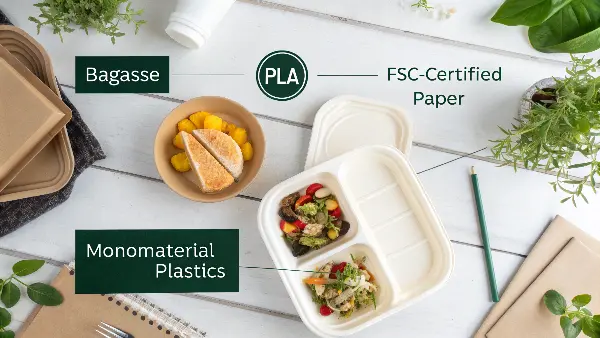
I’ve learned from years of sourcing that there’s no single "perfect" material. A solution that works wonders in one city might be a total failure in another simply due to differences in waste management facilities. That’s why a deep dive into the material options is so important. As a packaging specialist, your job is to balance performance, cost, and circularity. This means knowing the pros and cons of each option and how they fit into the bigger picture.
Comparing Key Circular Materials
Choosing the right material requires a careful evaluation. I always start by asking my clients: "What is the most likely end-of-life scenario for this package?" The answer dictates our material choice. Below is a breakdown of common options we work with at Ecosourcecn.
| Material | Source | Best Use Case | Circular Pathway | Key Considerations |
|---|---|---|---|---|
| Bagasse | Sugarcane Fiber | Hot/cold food containers, plates | Biological (Composting) | Certified home or industrial compostable. Sturdy and grease-resistant. |
| PLA | Corn Starch | Cold cups, cutlery, clear windows | Biological (Composting) | Requires industrial composting facilities. Not suitable for hot applications. |
| Kraft Paper | Wood Pulp | Bags, wraps, boxes | Both (Recycling/Composting) | Must be FSC-certified. Can be recycled if clean; compostable if food-soiled. |
| rPET | Recycled Plastic | Bottles, containers | Technical (Recycling) | Requires a strong recycling infrastructure. Reduces demand for virgin plastic. |
Making the Right Choice for Your Business
For a business like Jacky’s in Canada, the decision might pivot on regional infrastructure. If he’s supplying a cafe in Vancouver, which has a robust commercial composting program, PLA and bagasse are fantastic choices for their disposable tableware. However, for a product sold nationally, he might opt for clean, uncoated, FSC-certified paper, as paper recycling is more universally available. The goal is to ensure the material has a clear, accessible, and high-value pathway to be recovered and reused, whether by nature or by industry. Our role at Ecosourcecn is to provide certified, high-quality options for each of these pathways, ensuring our clients can implement their circular strategy effectively.
How can you implement a closed-loop system for your packaging?
You understand the principles and have selected your materials, but now comes the real challenge: implementation. How do you actually create a closed-loop system? Many businesses struggle here, facing logistical hurdles and customer confusion that can stop a great circular initiative in its tracks. A successful system requires more than just good intentions; it needs a practical, actionable plan.
Implementing a closed-loop system involves designing for recovery, establishing clear collection channels, and educating consumers. For compostable packaging, this could mean partnering with commercial composting facilities or supporting community compost programs. For recyclable materials, it means using clear on-pack labeling like the How2Recycle logo. The key is to take responsibility for the packaging’s entire lifecycle, not just until the point of sale, by making recovery easy and intuitive.

When I work with clients on this, we often find that collaboration is the secret ingredient. You can’t build a closed-loop system in isolation. It requires working with suppliers, waste management partners, and even your customers. I once worked with a client to launch a new line of compostable takeaway containers. The product itself was perfect, but the initial uptake was slow because customers didn’t know how to dispose of them. The solution was a simple, collaborative one that made all the difference.
Step 1: Design and Label for Recovery
The journey begins on the drawing board. Your packaging must be designed to succeed in its intended recovery system.
- For Composting: Use certified compostable materials (BPI, TUV) and avoid non-compostable attachments like plastic windows or certain inks.
- For Recycling: Stick to monomaterials. If you must use a label, ensure the adhesive is recycling-compatible.
Crucially, you must communicate this to the consumer. Clear, simple instructions on the package are non-negotiable. Use logos and phrases like "Commercially Compostable" or "Recycle Me" to guide the user.
Step 2: Establish Collection Pathways
This is where you build the "loop." Your packaging needs a way to get from the consumer to the right facility.
- In-Store Take-Back: For some businesses, setting up a collection point in-store is a powerful option. It shows commitment and gives you control over the material stream.
- Partner with Waste Haulers: Work with commercial waste management companies that can handle your specific materials. This is essential for B2B clients like restaurants or offices using your compostable products.
- Support Municipal Programs: Advocate for and educate customers about existing curbside recycling or composting programs in their area.
Step 3: Educate and Engage Everyone
A system is only as good as the people who use it.
- Consumer Education: Use your packaging, website, and social media to tell the story. Explain why you chose this material and how to dispose of it correctly. A simple QR code linking to a "how-to" video can work wonders.
- Staff Training: Your employees, especially in food service, are your front-line ambassadors. They must be able to answer customer questions about disposal correctly and confidently.
The client I mentioned earlier saw a huge turnaround when they implemented a three-pronged education campaign: clear on-pack symbols, a small sign near the disposal bins, and a one-page training guide for staff. It bridged the gap between a great product and real-world circular success.
What challenges will you face and how can you overcome them?
Adopting a circular model sounds great, but let’s be realistic—it comes with challenges. You might face higher material costs, confusing regulations, or a weak collection infrastructure in your region. Ignoring these potential roadblocks can lead to failed projects and wasted investment. To succeed, you must anticipate these hurdles and have a strategy ready to overcome them.
The primary challenges in implementing a circular packaging economy are cost, infrastructure gaps, and consumer behavior. Overcome these by seeking scalable solutions from suppliers like Ecosourcecn to manage costs, collaborating with local waste processors to bridge infrastructure gaps, and using clear, consistent on-pack labeling and education campaigns to guide consumers. A proactive, partnership-based approach is essential for navigating these complexities and achieving true circularity.
I’ve seen many enthusiastic businesses stumble because they underestimated these issues. One of the biggest lessons I’ve learned is that you cannot tackle these problems alone. The entire value chain has to work together. From your material supplier to your waste management partner to the end consumer, everyone has a role to play. Focusing on building these relationships is just as important as choosing the right material. Let’s look at the top three hurdles and how to clear them.
Challenge 1: Managing Costs
Sustainable materials can sometimes have a higher upfront cost than their conventional counterparts. This can be a significant barrier, especially for smaller businesses.
- Solution: Scale and Efficiency. This is where a partner like Ecosourcecn becomes invaluable. By sourcing at a large scale, we can offer competitive pricing on certified materials like bagasse and PLA. We also help optimize your packaging design to reduce material usage without sacrificing performance. Sometimes, a smarter design can offset the higher cost per unit of the material itself. It’s about looking at the total cost of ownership, not just the price tag.
Challenge 2: Navigating Infrastructure Gaps
You can have the most perfectly designed compostable container, but it’s useless if there are no composting facilities nearby.
- Solution: Collaboration and Phased Rollouts. Start by auditing the waste infrastructure in your key markets. If commercial composting is unavailable, focus on materials like FSC-certified paper that can be more widely recycled. You can also play a role in creating the infrastructure. We’ve seen clients partner with local startups or waste companies to pilot collection programs. A phased approach, starting in areas with supportive infrastructure, allows you to learn and grow your circular program successfully.
Challenge 3: Influencing Consumer Behavior
Even with the best system, success hinges on the consumer putting the package in the right bin. Contamination is a huge problem for both recycling and composting streams.
- Solution: Radical Simplicity and Clarity. Your communication must be foolproof. Use universally understood symbols and simple language. Avoid confusing terms. Standardized labeling systems like How2Recycle are gaining traction for a reason—they bring consistency. I always recommend A/B testing your on-pack instructions to see what resonates most with your audience. The clearer and easier you make it, the higher your success rate will be.
Conclusion
Making the shift to a circular economy is more than an environmental initiative; it is a strategic business decision that builds resilience, enhances your brand, and prepares you for the future. By designing out waste, choosing the right materials, implementing closed-loop systems, and proactively addressing challenges, your business can lead the way in sustainable food packaging.

