
Plastic straw bans are sweeping the globe, creating a compliance nightmare for your beverage business. You’re worried about finding compliant, high-quality alternatives without disrupting your supply chain or upsetting customers. Understanding these changes is the first step to confidently switching to sustainable straws that keep your business compliant and your customers happy.
The key to navigating global plastic straw bans is to stay informed about local and international legislation, such as the EU’s Single-Use Plastics Directive and similar bans across North America. Businesses must prioritize sourcing certified compostable or reusable alternatives like PLA, paper, or bamboo. Partnering with a knowledgeable supplier ensures your new straws meet all legal requirements, including food-grade safety and compostability standards, smoothing your transition away from single-use plastics.
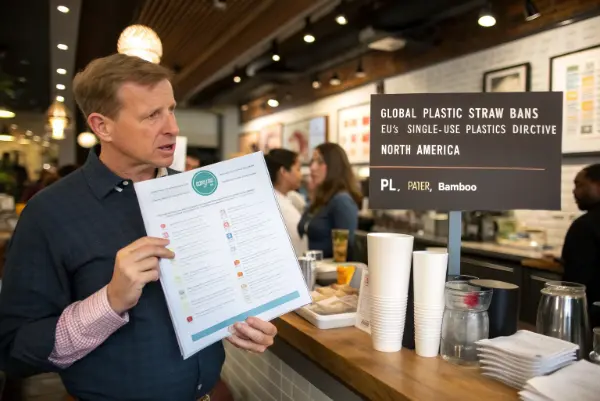
Navigating this new landscape can feel overwhelming. You’re not just replacing a product; you’re adapting your entire operation to a new global standard. But with the right information, you can turn this regulatory challenge into a powerful opportunity for your brand. Let’s break down exactly what you need to focus on to make the switch successfully.
How do I navigate the complex web of international certifications for eco-friendly straws?
You’ve found a potential sustainable straw supplier, but a list of acronyms like BPI, EN13432, and FDA stands in your way. Choosing the wrong product could lead to legal trouble, failed green claims, and damage to your brand’s reputation. Understanding these key certifications is crucial for ensuring your products are genuinely eco-friendly and meet legal standards.
To navigate certifications, focus on internationally recognized standards relevant to your target markets. For compostability, look for BPI (North America) or TÜV AUSTRIA’s OK compost HOME/INDUSTRIAL (Europe, based on EN13432). For food contact safety, ensure compliance with FDA (USA) and LFGB (Germany/EU). A reliable supplier should provide clear documentation for these certifications, verifying that your straws are both safe and truly sustainable for your customers’ peace of mind.
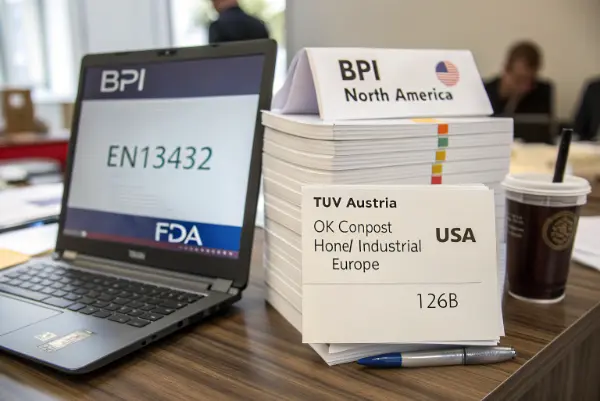
For a business like yours, certifications aren’t just logos on a box; they are your proof of compliance and your shield against greenwashing accusations. When I first started helping clients make this switch, the sheer number of standards was confusing. A client in Canada, much like Jacky, needed straws that would be compliant not only at home but also for their planned expansion into the European market. This meant we had to satisfy two different sets of rules.
We broke it down into two main categories: compostability and food safety.
Key Certifications to Look For
| Certification Type | Standard/Body | Primary Region | What It Guarantees |
|---|---|---|---|
| Compostability | BPI (Biodegradable Products Institute) | North America | The product will break down in a commercial composting facility. |
| Compostability | EN 13432 (TÜV AUSTRIA OK compost) | Europe | Meets European standards for industrial compostability. |
| Food Safety | FDA (Food and Drug Administration) | USA | The materials are safe for direct contact with food. |
| Food Safety | LFGB (Lebensmittel-, Bedarfsgegenstände- und Futtermittelgesetzbuch) | Germany / EU | Meets strict European standards for food contact materials. |
It’s critical to ask potential suppliers for the actual certification documents, not just claims on their website. I always advise clients to verify the certificate numbers on the issuing body’s public database. This extra step provides total assurance that your supply chain is secure, your products are legitimate, and your brand’s eco-friendly promise is built on a foundation of trust.
What are the key differences between PLA, paper, and other alternative straws?
You know you need to ditch plastic, but the world of alternatives is vast and confusing. Will paper straws get soggy before the drink is finished? Is PLA truly better for the environment? Choosing the wrong material can lead to unhappy customers and operational headaches, undermining your efforts to go green.
The main difference lies in performance, cost, and end-of-life. Paper straws are low-cost but can lose durability in liquid. PLA straws, made from plant starch, mimic plastic’s feel and performance but require industrial composting facilities to break down. Other options like bamboo or wheat offer unique aesthetics but may come at a higher price point. The best choice depends on your specific business needs, customer experience goals, and local waste infrastructure.
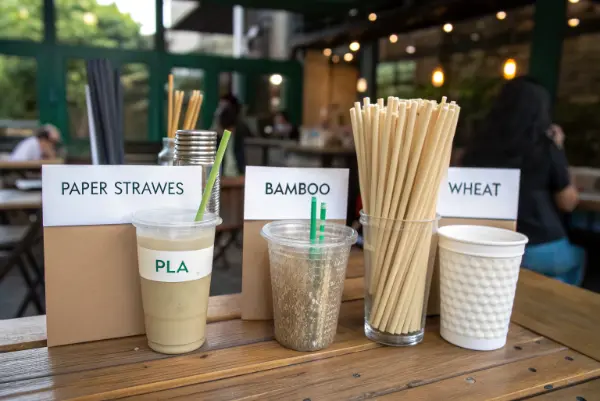
I remember working with a large café chain that was terrified of switching to paper straws. They had heard all the horror stories from customers about "soggy paper mush" ruining an expensive iced coffee. Their fear was valid. The customer experience is everything. So, we decided to run a pilot test with a few different materials to see what worked best for their specific menu and customer base.
The goal was to find a balance between sustainability, function, and cost. We analyzed the top contenders to give the client a clear picture of their options.
Comparing Sustainable Straw Materials
| Material | Pros | Cons | Best For |
|---|---|---|---|
| Paper | – Widely available – Low cost – Home compostable (if uncoated) |
– Can get soggy – May affect taste – Quality varies widely |
High-volume businesses like fast-food chains where drinks are consumed quickly. |
| PLA (Polylactic Acid) | – Feels and performs like plastic – Sturdy and durable in liquids – Made from renewable resources |
– Requires industrial composting – Looks like plastic, causing confusion – Higher cost than paper |
Cafes, juice bars, and restaurants where drink quality and durability are paramount. |
| Bamboo / Wheat | – Reusable or single-use options – Natural, premium look and feel – 100% natural material |
– Higher price point – Supply can be less consistent – May have slight natural flavor |
Upscale establishments, eco-conscious brands, and hotels looking for a premium aesthetic. |
Ultimately, the café chain chose high-quality, thick-walled paper straws for their standard drinks and offered PLA straws as an option for thicker beverages like milkshakes. This hybrid approach allowed them to manage costs while ensuring no customer had a bad experience. Your choice doesn’t have to be one-size-fits-all. It’s about finding the right tool for the right job.
Can sustainable straws be customized for my brand without compromising quality?
You’re ready to switch to eco-friendly straws, but you don’t want to lose your brand identity in the process. Standard, unbranded straws make your product look generic. You worry that adding a logo or custom color will compromise the straw’s compostability or food-safe properties, defeating the whole purpose of making the switch.
Absolutely. High-quality sustainable straws can be fully customized with your brand’s logo, colors, and even unique wrappers without sacrificing compliance. Reputable suppliers use food-grade, soy-based inks and ensure that all customization options meet the same compostability and safety standards (like BPI and FDA) as the base product. This allows you to enhance your brand visibility while upholding your commitment to sustainability.
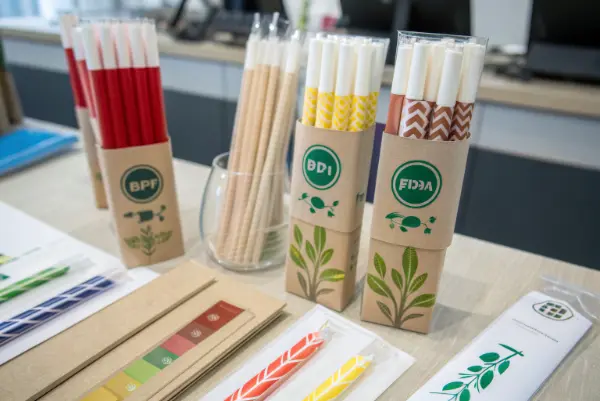
Branding is non-negotiable for most businesses, and it shouldn’t be. One of my clients, a boutique hotel chain, viewed every single item a guest touched as part of their brand experience. They had custom logos on everything from soap wrappers to sugar packets. The thought of offering a plain, generic straw was simply not an option for them. They were concerned that printing on a paper or PLA straw would involve chemicals that weren’t food-safe or biodegradable.
We addressed this by connecting them with one of our manufacturing partners who specializes in custom printing for eco-friendly products. The key is to ask the right questions and demand transparency.
Key Considerations for Customization
-
Ink Type: The number one question should be about the ink. Insist on food-grade, soy-based or water-based inks. These are non-toxic and won’t leach harmful chemicals into the beverage or the environment as the straw breaks down. Avoid suppliers who can’t specify the type of ink they use.
-
Wrapper Customization: Don’t forget the wrapper! A custom-printed wrapper is a fantastic branding opportunity. Whether it’s paper or PLA film, the wrapper should also be certified compostable and printed with safe inks. It’s a great place to put your logo and a message about your commitment to sustainability.
-
Structural Integrity: Ensure that the customization process doesn’t weaken the straw. A good supplier will have quality control measures in place to test the durability of printed straws to make sure they perform just as well as their unprinted counterparts.
The hotel was thrilled when they received their samples: beautiful, individually wrapped paper straws with their elegant logo printed in a custom color. It proved that going green doesn’t mean you have to go generic. Customization elevates your brand and communicates your eco-friendly values directly to your customer.
How can my business manage the cost implications of switching from plastic to sustainable straws?
The decision to switch to sustainable straws aligns with your brand’s values, but the numbers on the invoice are daunting. Eco-friendly alternatives are often more expensive than plastic, and you’re concerned about how this increase will affect your bottom line. You need a strategy to manage these new costs without alienating customers or sacrificing profitability.
Managing the cost involves a multi-faceted approach. First, order in bulk to achieve a lower price per unit. Second, partner directly with a manufacturer or a B2B platform like Ecosourcecn to eliminate middlemen. Finally, reframe the cost as a marketing investment. Communicate your sustainable choices to customers, as many are willing to support businesses that prioritize the environment, enhancing brand loyalty and justifying a potential small price adjustment.

I’ve had this conversation with nearly every client. The initial "sticker shock" is real. A small, independent coffee shop owner once told me, "I want to do the right thing, but the paper straws cost three times as much. How can I possibly absorb that?" It’s a fair question that requires a practical, strategic answer, not just wishful thinking. We can’t ignore the financial reality.
Instead of looking at it as a simple expense, we worked on a plan to turn it into a value-add for his business. It’s not just about spending more; it’s about investing smartly.
Strategies for Managing Higher Costs
-
Optimize Your Ordering: The most direct way to save is through volume. If you have the storage space, increasing your order size can significantly reduce the per-unit cost. I often help smaller businesses connect to form buying groups, allowing them to pool their orders and access the bulk pricing typically reserved for large chains.
-
Go Direct to the Source: The more hands a product passes through, the more expensive it gets. By working with a platform that connects you directly with vetted manufacturers, you cut out several layers of distribution markups. This has been a game-changer for many of my clients, making the switch far more affordable than they initially thought.
-
Communicate Your Value: This is the most crucial step. Don’t just quietly switch straws. Announce it! Use small signs on your tables, a note on your menu, or a post on social media. Explain that you’ve moved to 100% compostable straws to help reduce plastic waste. Frame it as a commitment to the community and the planet. When customers understand the "why," the slightly higher cost of their drink becomes a contribution to a cause they believe in. Many customers are not only willing to accept this, but they will also choose your business over a competitor because of it.
By implementing these strategies, the coffee shop owner was able to make the switch without hurting his margins. In fact, he gained a new group of loyal customers who admired his commitment to sustainability.
Conclusion
Navigating the global shift away from plastic straws is a challenge, but it is also a significant opportunity. By understanding the regulations, choosing the right certified materials, and communicating your commitment to customers, you can turn a compliance requirement into a powerful statement about your brand’s values. Making a sustainable choice has never been more critical.

