
Choosing the right packaging for your beverage brand feels incredibly complex. You’re trying to meet customer expectations for sustainability, but terms like "biodegradable" and "compostable" are confusing. The pressure to make the right choice is immense, because the wrong one could damage your brand’s reputation and, more importantly, harm the planet we’re all trying to protect.
For a beverage business, the "right" solution depends on your product, local disposal infrastructure, and brand goals. Recyclable options like aluminum cans and glass bottles are best if robust recycling systems are widely available to your customers. Certified compostable packaging, such as PLA-lined paper cups or bagasse lids, works perfectly in closed-loop systems like events or cafes that partner with a commercial composting facility. "Biodegradable" is often too vague, so focus on certified compostable or recyclable materials for a verifiable impact.
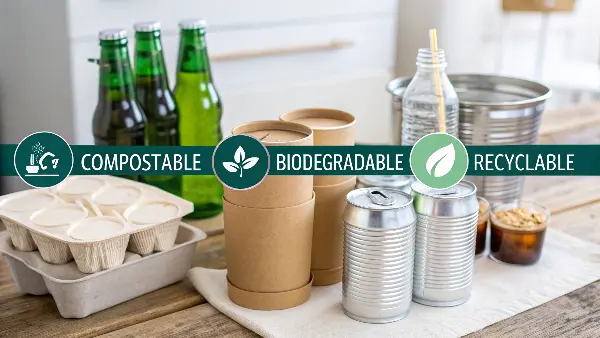
It feels like you need a science degree just to order coffee cups these days, doesn’t it? As someone who lives and breathes sustainable sourcing, I can tell you that you’re not alone in feeling this way. I’ve had countless conversations with partners like you, trying to navigate the maze of green claims and certifications.
Getting this right is about more than just marketing; it’s about making a genuine, positive impact. To help you choose with confidence, we need to break down the key differences and what they mean for your business in the real world. Let’s start with the most common point of confusion and clear the air once and for all.
What is better, compostable or biodegradable?
You’ve seen "biodegradable" and "compostable" labels on packaging, and they sound like they mean the same thing. This common confusion makes it difficult to choose materials you can truly stand behind and explain clearly to your customers. Picking the wrong one could mean your "eco-friendly" cups are just ending up in landfill, creating harmful methane gas.
Certified compostable is almost always better than simply biodegradable for packaging. Compostable products are held to a strict standard (like ASTM D6400 or EN 13432) certifying they will break down into nutrient-rich soil within a specific timeframe in a commercial composting facility. "Biodegradable" is an unregulated term. While everything eventually biodegrades, it could take hundreds of years in a landfill, sometimes leaving behind microplastics or toxic residues.
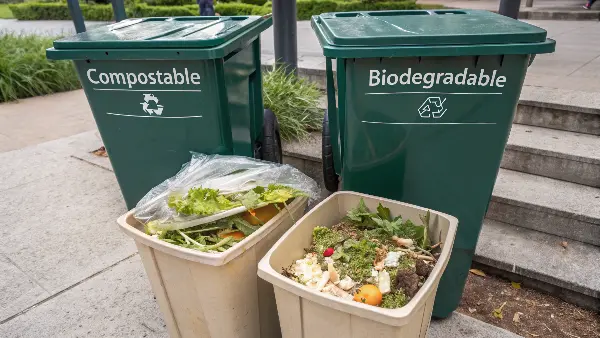
To make an informed decision, you need to understand the story behind these labels. They represent two very different end-of-life scenarios. One is a verified, circular process, while the other is often a dead end. As a sourcing partner, it’s my job to clarify these details so you can build your brand on a foundation of true sustainability, not just marketing buzzwords.
The Vague Promise of "Biodegradable"
The term "biodegradable" simply means that a material can be broken down by microorganisms like bacteria and fungi over time. The problem is that this definition lacks critical context. It doesn’t specify how long it will take or what conditions are needed. A log of wood is biodegradable, but it takes decades. A so-called "biodegradable" plastic bag might take 500 years in a landfill, and even then, it may just crumble into harmful microplastics that pollute our soil and oceans. Because it’s unregulated, this term can be used in misleading ways—a practice known as greenwashing. For a business leader like yourself who needs reliable and verifiable solutions, "biodegradable" alone just isn’t a strong enough claim.
The Certified Standard of "Compostable"
"Compostable," on the other hand, is a precise and regulated term. For a product to be certified compostable, it must meet strict scientific standards like ASTM D6400 in the US or EN 13432 in Europe. These certifications guarantee that the product will break down into non-toxic, natural elements (humus, or soil) within about 90-180 days. However, this process requires the specific high-heat, high-moisture conditions of an industrial or commercial composting facility. It won’t happen in your backyard compost pile or in a landfill. This means choosing compostable packaging also involves considering if your customers have access to these facilities.
| Feature | Biodegradable | Certified Compostable |
|---|---|---|
| Definition | Breaks down by natural processes | Breaks down into humus under specific, controlled conditions |
| Timeframe | Not specified (can be hundreds of years) | Specified (e.g., 90-180 days in a commercial facility) |
| End Product | Can leave behind microplastics, toxic residue | Becomes non-toxic, nutrient-rich soil (humus) |
| Regulation | Unregulated, often a marketing term | Regulated by standards (ASTM D6400, EN 13432) |
| Best Use Case | Generally not recommended for packaging | Foodservice items in closed-loop systems with composting access |
Which is better, compostable or recyclable?
Now that we’ve clarified compostable versus biodegradable, another big question comes up. How does compostable stack up against recycling, the system we’re all familiar with? You want to divert waste from landfills, but choosing between these two major waste streams can feel like a strategic fork in the road for your business.
Neither compostable nor recyclable is universally "better"; the best choice depends entirely on your specific product and the local waste infrastructure. Recyclable materials like aluminum and glass are excellent in areas with strong, efficient recycling programs. Compostable items are ideal for food-contaminated packaging (like coffee cups or food trays) in places with access to commercial composting facilities, as this contamination makes them unsuitable for recycling.
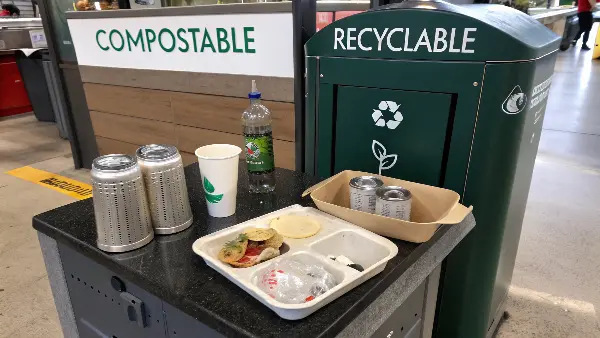
The "right" answer isn’t about picking a single winning material, but about understanding which system your packaging is most likely to succeed in. A highly recyclable aluminum can is useless if it ends up in a landfill, and a perfectly compostable cup is just trash if there’s no composting facility nearby. This is a logistics and systems problem as much as it is a materials science problem. Let’s dig into the details of each system to see where your beverage business fits best.
The Strengths and Weaknesses of Recycling
Recycling is the process of collecting and processing materials to turn them into new products. For certain beverage containers, it’s a fantastic solution. Aluminum cans are a star performer—they are infinitely recyclable with no loss of quality, and turning old cans into new ones uses about 95% less energy than making them from raw materials. Glass bottles are also highly recyclable. The big challenge with recycling is contamination. A paper cup lined with plastic or PLA to prevent leaks can’t be recycled with regular paper. Similarly, food residue on any recyclable item can contaminate an entire batch, sending it all to the landfill. The effectiveness of recycling heavily relies on consumer diligence and the capabilities of the local sorting facility.
Where Compostable Packaging Shines
Compostable packaging offers a brilliant solution, especially for the foodservice and beverage industry. Think about your used coffee cups, smoothie containers, or paper straws. They are almost always contaminated with leftover liquids, sugar, and milk. This contamination makes them a nightmare for recyclers. But for a composting facility, that food waste is a feature, not a bug! Compostable items are designed to break down alongside food scraps, turning everything into valuable compost. This makes them perfect for single-use items in environments like coffee shops, stadiums, and corporate campuses where you can set up a closed-loop system with dedicated compost bins and a partnership with a local commercial composter. The main limitation is the current availability of these facilities, which is growing but not yet universal.
When I work with clients, we often map out their primary sales channels. Are you selling at festivals with controlled waste streams? Compostable is a home run. Are you selling canned cold brew in supermarkets across the country? Aluminum is likely your most reliable bet.
What is the most environmentally friendly packaging for liquids?
When it comes to beverages specifically, the container itself is everything. It has to protect the product, be safe for the consumer, and align with your brand’s environmental promises. You’re not just selling a drink; you’re selling a full product experience, and the package is the first thing your customer touches and the last thing they dispose of.
The most environmentally friendly liquid packaging depends on the beverage type, distribution model, and available disposal options. For shelf-stable, widely distributed drinks, aluminum cans and glass bottles are top contenders due to high recycling rates and material stability. For hot or cold drinks served on-premise (like at a café or event), certified compostable options like PLA-lined paper cups or CPLA lids are superior because they can be composted along with any liquid residue.
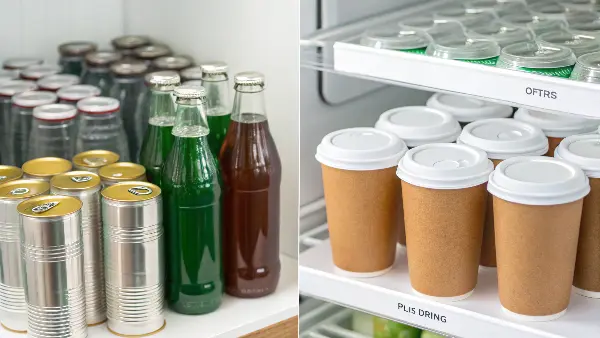
As your sourcing partner, I guide clients to think about the entire life cycle of their packaging—from raw material extraction to final disposal. It’s a holistic view. A package that seems perfect on paper might be a poor choice if it doesn’t fit into the real-world systems your customers use every day. Let’s evaluate the top contenders for liquids and see where they excel.
Analyzing the Top Contenders
Let’s break down the most common materials used for liquid packaging. Each has a unique environmental footprint and is suited for different applications.
- Aluminum Cans: These are a powerhouse of sustainability. They are lightweight, which reduces shipping emissions, and have one of the highest recycling rates globally. The material can be recycled indefinitely without degrading. This makes them ideal for carbonated drinks, juices, and cold brew coffee that are sold through retail channels.
- Glass Bottles: Glass also offers infinite recyclability without quality loss and is excellent at preserving the flavor of the product inside. Its main drawbacks are its weight, which increases transportation costs and emissions, and its fragility. It’s a great choice for premium beverages where a high-end feel is important, provided solid recycling collection systems are in place.
- PLA (Polylactic Acid) Cups: PLA is a plant-based bioplastic that is certified compostable. These cups are perfect for cold drinks like iced coffee, smoothies, and juices served in-house or at events. They look and feel like traditional plastic but are designed to be commercially composted. It’s crucial to label them clearly as "Compostable" to avoid confusing them with PET plastic, which would contaminate the recycling stream.
- Bagasse-Lined Paper Cups: For hot beverages, you need a cup that can handle the heat. Many "compostable" paper cups are lined with PLA. Another excellent material is bagasse, which is the fibrous pulp left over from sugarcane processing. It’s a rapidly renewable resource, and products made from it are sturdy, and certified compostable. This makes bagasse lids and cups a fantastic alternative to Styrofoam or plastic-lined paper.
Here’s a quick reference table I use to help clients decide:
| Packaging Option | Best For | Key Environmental Benefit | Major Consideration |
|---|---|---|---|
| Aluminum Cans | Retail distribution (soda, beer, etc.) | High recycling rate, lightweight | Requires energy-intensive initial production |
| Glass Bottles | Premium retail (juices, kombucha) | Infinitely recyclable, inert | Heavy, higher shipping emissions |
| PLA Cups & Lids | On-premise cold drinks (cafes, events) | Commercially compostable, plant-based | Requires commercial composting facility |
| Bagasse/PLA Paper Cups | On-premise hot drinks (coffee, tea) | Compostable with food waste | Requires commercial composting facility |
Ultimately, the goal is to choose the option that has the highest chance of being properly recovered and repurposed in the locations where you sell your products.
What are the best eco-friendly packaging options for food businesses?
While we’ve focused heavily on beverages, many businesses offer both food and drinks. The principles we’ve discussed apply broadly, but food packaging introduces new variables like grease-proofing, different shapes, and solid waste. You need a cohesive strategy that covers everything from your coffee cups to your sandwich containers.
The best eco-friendly options for a food business are materials that can handle food contact and align with a circular economy. For grab-and-go items, look to certified compostable materials like bagasse clamshells, PLA-lined kraft paper bowls, and wooden cutlery. These can all be disposed of in a single compost bin along with any food scraps, simplifying cleanup and maximizing waste diversion. For retail food products, recyclable materials like glass jars or aluminum trays are excellent, provided they can be cleaned effectively by the consumer before recycling.
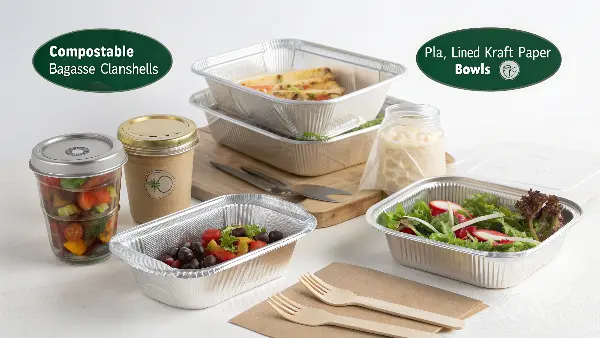
When I consult with a business, I always encourage them to think about their entire menu. A streamlined system where most, if not all, of your disposable packaging can go into one bin (either recycling or compost) makes it much easier for both your staff and your customers to do the right thing. This user-friendly approach is key to the success of any sustainability program. Choosing the right materials from the start prevents confusion and ensures your investment in green packaging actually pays off.
Building a Cohesive Sustainable Packaging Strategy
Creating a successful eco-friendly packaging system for a food business is about more than just buying the right products; it’s about thoughtful implementation.
-
Material Synergy: First, aim for material consistency. If you run a cafe, it makes sense for your coffee cups, lids, pastry bags, and sandwich wrappers to all be compostable. This allows you to set up a single, clearly-marked "Compost" bin for customers. At Ecosourcecn, we help clients bundle these items—from PLA cups and CPLA lids to bagasse containers and wooden stir sticks—to create a complete solution. This avoids the situation where a customer has to figure out if the cup is compostable but the lid is trash.
-
Functionality is Key: Your sustainable packaging must perform. There’s nothing worse than a soggy paper straw or a bagasse container that leaks dressing. That’s why we rigorously vet our products. For example, our kraft paper bowls often have a PLA lining that makes them perfect for salads or rice bowls, preventing leaks while remaining fully compostable. Your packaging must stand up to the demands of your food, whether it’s hot, cold, wet, or greasy.
-
Clear Communication: The final, critical piece is communication. Your customers want to help, but they need clear instructions. Use simple, bold signage on your bins. A picture of a coffee cup, a napkin, and a sandwich wrapper above the compost bin is far more effective than text alone. You can also print clear disposal instructions directly on the packaging itself. A simple "Compost Me" logo can make a world of difference. Your packaging is a tool, but your system and communication are what make it successful. By providing a full suite of certified products and guidance on implementation, we help our partners not just buy green, but truly be green.
Conclusion
Navigating the world of sustainable packaging doesn’t have to be overwhelming. By understanding the distinct differences between compostable, biodegradable, and recyclable options, you can make an informed choice. The best solution always depends on your specific product, your customers’ location, and the disposal systems available to them, creating a truly responsible end-of-life plan for your packaging.
