
As a business, you pour resources into making your products more sustainable, but do your customers even notice? It can be frustrating when your genuine efforts get lost in a sea of vague "eco-friendly" claims. This confusion leads to distrust, and you risk losing sales to shoppers who can’t easily see the real environmental value you offer.
Carbon footprint labeling is directly changing consumer habits by offering clear, standardized information about a product’s environmental impact. This simple, data-driven metric allows shoppers to compare items at a glance, much like they do with nutritional information. As a result, consumers are actively choosing lower-carbon options, creating a market incentive for businesses to improve their supply chains, reduce emissions, and demonstrate genuine commitment to sustainability to win customer loyalty.
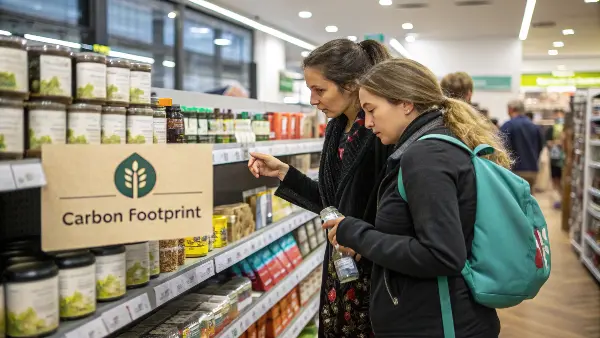
It’s a powerful concept—a single number that could reshape entire industries. But before we explore how this is playing out on store shelves and online, let’s start with the basics. Many people hear the term, but not everyone knows exactly what it means for the products they buy every day. To truly understand its impact, we first need to define what we’re talking about.
What is carbon footprint labelling?
Are you trying to make sustainable choices but feel overwhelmed by confusing green claims? It’s a common problem. Without clear data, it’s nearly impossible to know which product is genuinely better for the planet. This uncertainty can make you feel like your choices don’t matter, leading to frustration and inaction.
Carbon footprint labeling is a system that places a clear, simple label on a product showing the total greenhouse gas emissions generated throughout its entire lifecycle. This "cradle-to-grave" calculation includes sourcing raw materials, manufacturing, transportation, and even disposal. The goal is to provide consumers with a standardized, easy-to-understand metric—like grams of CO2 equivalent (CO2e)—to compare the environmental impact of different products at the point of purchase.
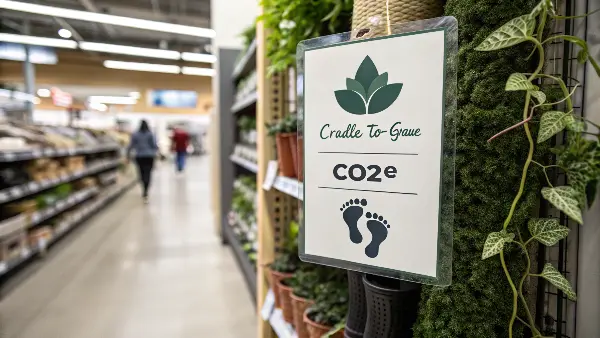
When we talk about carbon footprint labeling, we’re talking about a move towards radical transparency. Think of it like the nutrition labels we’ve relied on for decades. Before those were mandatory, we had to guess about the sugar or fat content in our food. Now, that information is standardized and clear. Carbon labels aim to do the same for environmental impact. They distill complex supply chain data into a single, digestible figure. This figure, usually measured in grams or kilograms of carbon dioxide equivalent (CO2e), represents the total impact of getting that product into your hands. As a business owner or product specialist like myself, I’ve seen firsthand how this shift empowers everyone. It’s not just about a label; it’s about accountability.
To understand its value, let’s break down what goes into that number.
The Lifecycle of a Product
A carbon footprint calculation covers the entire journey of a product. This comprehensive approach is often called a "Life Cycle Assessment" (LCA).
| Stage | What It Includes |
|---|---|
| Raw Materials | Emissions from growing, mining, or extracting the base components. |
| Manufacturing | Energy used in factories to process materials and assemble the product. |
| Transportation | Fuel burned to move the product from the factory to warehouses and stores. |
| Consumer Use | Energy the product might consume during its use (e.g., a coffee machine). |
| End-of-Life | Emissions related to disposal, whether it’s landfill, recycling, or composting. |
This holistic view ensures that companies can’t hide emissions in one part of their supply chain. It forces a complete look at the environmental cost, which is a big step forward. For us at Ecosourcecn, this level of detail is crucial when we evaluate a new compostable cup or biodegradable container for our clients. It helps us provide truly sustainable solutions.
Would 73% of global consumers really change their consumption habits to reduce their environmental impact?
As a business, you hear statistics about conscious consumers, but it’s easy to wonder if people’s actions truly match their words. You might invest heavily in sustainability, only to worry that price and convenience will always win out. This doubt can make you hesitant to fully commit to greener practices, fearing the return on investment isn’t there.
Yes, the data overwhelmingly shows a shift in consumer priorities. A landmark Nielsen study found that 73% of global consumers would definitely or probably change their consumption habits to reduce their environmental impact. This isn’t just a sentiment; it’s driving purchasing decisions. Consumers are actively seeking out brands that align with their values, and they are increasingly willing to pay more for products that are sustainable, transparent, and ethically sourced.
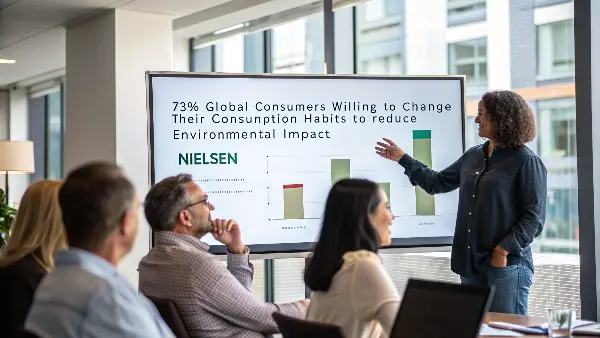
That 73% figure is more than just a passing trend; it represents a fundamental change in how people relate to the products they buy. I remember a few years ago when I was working with a client in Canada, a packaging specialist named Jacky. He told me his company was seeing a real shift. Customers weren’t just buying their products; they were buying into their mission. They would write emails asking about the sourcing of their kraft paper or the compostability of their PLA containers. This direct feedback showed that people were paying attention. They want to feel good about where their money goes, and knowledge is the first step. When you give them clear information, like a carbon label, you empower them to act on their intentions.
From Intention to Action
The gap between what people say they want and what they actually do is narrowing. Several factors are driving this change.
- Increased Awareness: Thanks to documentaries, news reports, and social media, the realities of climate change are more visible than ever. This awareness creates a personal sense of responsibility.
- Information Accessibility: Carbon labels are a key part of this. They remove the guesswork. Instead of wondering which option is better, a consumer can see a clear number.
- Brand Accountability: Consumers now expect brands to be part of the solution, not the problem. A company that displays its carbon footprint is making a bold statement of transparency and confidence in its practices.
Generational Shifts in Buying Power
This trend is especially strong among younger generations. Millennials and Gen Z are not only vocal about their values but are also directing their spending accordingly.
| Generation | Key Characteristic | Impact on Businesses |
|---|---|---|
| Millennials | Value-driven and willing to pay a premium for sustainability. | Push brands to adopt transparent and ethical supply chains. |
| Gen Z | "Climate generation," highly mobilized and digitally native. | Demand authenticity and hold brands accountable on social media. |
What this means for businesses—including our partners at Ecosourcecn—is that sustainability is no longer a "nice-to-have." It’s a core business imperative. Ignoring this massive market segment is simply not an option for long-term growth.
Would carbon food labels change the way you shop?
Think about your last trip to the grocery store. You likely checked prices, maybe looked at the calories or organic seals. But what if there was another number right there on the package—a "climate score"? It’s easy to feel like you’re already making too many decisions. Adding another complex factor could feel overwhelming and might not seem practical.
Absolutely. For most people, carbon food labels would fundamentally change their shopping habits by making the invisible impact of food visible. Just as calorie counts transformed how we think about health, a simple CO2e number would empower shoppers to make climate-friendly choices instantly. Seeing that one product has double the carbon footprint of another would likely influence your decision, especially if the price and quality are similar.
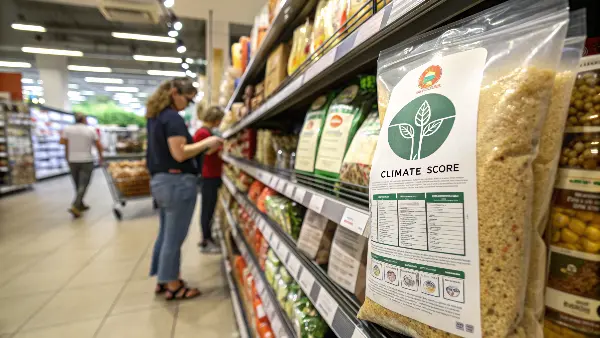
The food industry is one area where carbon labeling can have a massive impact, because the production of food is a major contributor to global emissions. I’ve seen this firsthand working with clients in the food service industry. They are constantly looking for ways to reduce their environmental footprint, from switching to bagasse containers to sourcing local ingredients. A carbon label brings that entire supply chain story directly to the consumer at the most critical moment: the point of purchase. It connects the dots between a steak and deforestation, or between almonds and water usage, in a way that’s immediate and personal. It turns an abstract concept into a tangible choice you make for your family’s dinner.
The Power of Comparison
The real genius of a carbon label is its simplicity. It allows for direct, A-to-B comparisons.
- Beef vs. Lentils: A shopper might see that a pack of ground beef has a footprint of 7 kg CO2e, while a bag of lentils is just 0.5 kg CO2e. This stark difference can steer them toward a more plant-based meal, even if just once a week.
- Imported vs. Local: An avocado from Mexico might have a higher carbon footprint than locally grown apples due to "food miles." The label makes this transportation cost visible.
How Different Foods Stack Up
The carbon footprint of food products can vary dramatically based on the type of food and how it’s produced. Here is a general comparison to illustrate the point.
| Food Category | Typical Carbon Footprint (kg CO2e per kg of product) | Key Reasons for Impact |
|---|---|---|
| Red Meat (Beef, Lamb) | 20 – 60+ | Methane from livestock, land use, feed production. |
| Poultry & Pork | 4 – 10 | Lower feed conversion ratio than beef, less methane. |
| Cheese & Dairy | 5 – 15 | Emissions from livestock and processing. |
| Plant-Based Proteins | 0.5 – 2 | Efficient land use, no methane from animals. |
| Vegetables & Fruits | 0.3 – 1.5 | Varies based on farming and transportation (air-freighted is high). |
This kind of information, when presented clearly on a label, doesn’t just inform; it educates. It empowers consumers to align their grocery cart with their environmental values, one purchase at a time. It’s a powerful tool for change.
How are carbon footprints related to online shopping?
Online shopping is incredibly convenient, but have you ever stopped to think about the environmental cost of that convenience? We often focus on the product itself, not the hidden journey it takes to reach our doorstep. The emissions from packaging, transportation, and returns are invisible, making it easy to overlook the true impact of our e-commerce habits.
Carbon footprints are deeply connected to online shopping through logistics, packaging, and returns. Every expedited shipment, oversized box filled with plastic air pillows, and returned item adds to the overall emissions. E-commerce businesses are now using carbon footprint data to offer "green shipping" options, optimize packaging with sustainable materials like those from Ecosourcecn, and streamline reverse logistics to minimize their environmental impact and appeal to conscious online shoppers.
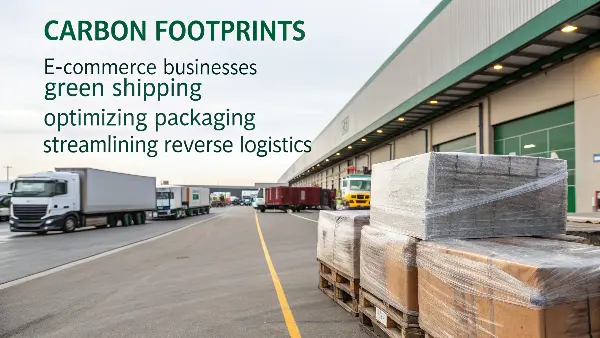
The e-commerce boom has completely changed the way we shop, but it’s also created a new and complex set of environmental challenges. When I work with businesses that sell online, the conversation almost always turns to packaging and shipping. These are the two biggest levers they can pull to reduce their carbon footprint. Think about the last package you received. Was the box too big for the item inside? Was it filled with plastic? These are no longer just cost issues; they are brand reputation issues. Customers are noticing. An online purchase is a company’s most direct physical touchpoint with its customer, and the packaging speaks volumes about its values.
The Key Impact Areas in E-commerce
Let’s break down where the emissions come from in a typical online order. Understanding this helps us identify where to make improvements.
- Warehousing: The energy used to power massive fulfillment centers, including lighting, heating, cooling, and automated systems.
- Packaging: The production of packaging materials (cardboard, plastic, tape) has its own carbon footprint. Choosing lightweight, recycled, and biodegradable materials is critical. This is where our products, like FSC-certified paper mailers and compostable bags, make a huge difference.
- Last-Mile Delivery: This is often the most carbon-intensive part of the journey. A delivery van making dozens of individual stops is less efficient than a single truck delivering to a retail store. The demand for next-day or same-day delivery makes this even worse by preventing optimized, consolidated routes.
- Returns (Reverse Logistics): The process of shipping an item back to the warehouse doubles the transportation emissions and often results in the product being discarded.
Solutions for a Greener Click
The good news is that both businesses and consumers have the power to reduce this impact.
| Action | For Businesses | For Consumers |
|---|---|---|
| Smarter Shipping | Offer incentives for slower, consolidated shipping. | Choose the "green shipping" option at checkout, even if it takes longer. |
| Optimized Packaging | Use right-sized boxes and switch to sustainable materials. | Support brands that use eco-friendly packaging. |
| Reduce Returns | Provide detailed product descriptions, size guides, and reviews. | Shop mindfully, check sizes, and avoid "bracketing" (buying multiple sizes to return). |
By focusing on these areas, e-commerce can evolve from a carbon-intensive convenience into a more sustainable and efficient model for retail.
Conclusion
Carbon footprint labeling is more than a trend; it’s a transformative tool. It provides the clarity consumers have been asking for, turning sustainable intentions into measurable actions. For businesses, this transparency is no longer optional—it’s a powerful way to build trust, demonstrate real commitment, and win the loyalty of a new generation of shoppers.
