
Are you feeling stuck in a green rut, using the same bamboo and bagasse products as everyone else? Your customers demand innovation, but finding the next big thing in sustainable packaging feels like searching for a needle in a haystack. I’m here to tell you that a new wave of materials is ready to shake things up and set your brand apart.
Yes, several exciting and innovative materials are emerging beyond the well-known options like bamboo and bagasse. These include mycelium (mushroom root), seaweed-based films, and advanced PLA composites. These next-generation materials offer unique benefits such as being home-compostable, utilizing marine resources sustainably, or enhancing the performance of existing bioplastics. They represent the future of eco-friendly packaging, providing businesses with new ways to meet both performance needs and sustainability goals.
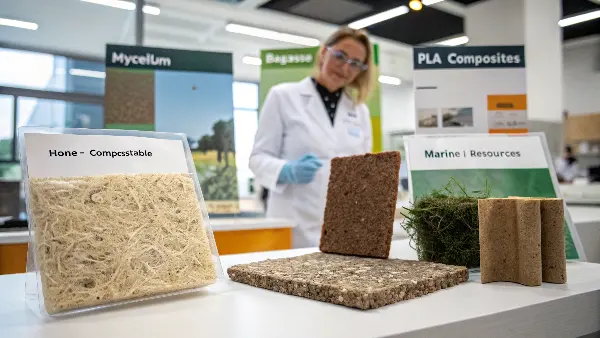
I’ve spent years in this industry, and I’ve seen how quickly trends can change. Jacky, a packaging specialist I work with in Canada, recently told me, "Our customers are smart. They know about bagasse. They’re starting to ask, ‘What’s next?’" This is the question that drives us forward. It’s not enough to be sustainable; we have to be innovative too. Let’s explore some of these exciting new materials that are pushing the boundaries of what’s possible in green packaging.
Is Mycelium Packaging a Fungi-tastic Future for Eco-Friendly Shipping?
You know that horrible feeling of unboxing a product and being left with a mountain of styrofoam that will outlive you? This plastic foam is a major headache for eco-conscious brands and their customers. It’s bulky, non-biodegradable, and a complete disaster for your brand’s green image. But what if the solution was quietly growing in nature?
Mycelium packaging, often called mushroom packaging, is a game-changing alternative to materials like Styrofoam. It is grown, not manufactured, using mycelium—the root structure of fungi—and agricultural byproducts like hemp or wood chips. This mixture is placed into a custom mold and grows into a solid, durable shape. The final product is lightweight, shock-absorbent, and, best of all, fully home-compostable. It breaks down in a garden in just a few weeks, turning into nutrient-rich soil.
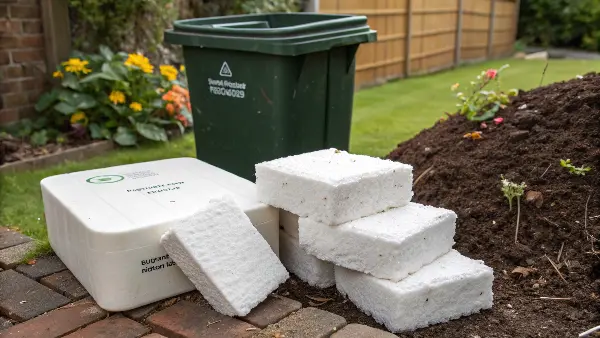
I remember the first time I held a piece of mycelium packaging. It felt organic, strong, and completely different from anything else. It wasn’t sterile plastic; it had character. This material solves a huge problem for businesses shipping fragile goods, like cosmetics in glass bottles or delicate electronics. It offers custom-fit protection without the environmental guilt. Let’s dive deeper into what makes mycelium such a promising option.
How Does It Grow from Fungus to Form?
The process is more like farming than manufacturing. It starts with sourcing agricultural waste that would otherwise be thrown away. This waste is cleaned and then inoculated with living mycelium spores. The mixture is then packed into a 3D mold of the desired shape—for example, an insert to hold a bottle securely in a box. The mold is left in the dark for a few days while the mycelium network grows, feeding on the waste and binding it together into a solid mass. Once it has filled the mold, it’s removed and heat-treated to stop the growth, resulting in a lightweight but surprisingly strong packaging component.
What Are the Real-World Pros and Cons?
Like any material, mycelium has its strengths and weaknesses. It’s crucial for buyers like Jacky to understand these before committing. It’s not a one-size-fits-all solution, but for the right application, it’s unbeatable.
| Aspect | Pros | Cons |
|---|---|---|
| Sustainability | Fully home-compostable; turns waste into a valuable product; carbon-negative manufacturing process. | Not suitable for direct food contact without a barrier; natural, earthy appearance may not fit all brand aesthetics. |
| Performance | Excellent shock absorption; customizable to any shape; good thermal insulator. | Can be brittle if designed too thin; not waterproof; susceptible to moisture if not stored properly. |
| Production | Low-energy "growing" process. | Production cycle takes several days, longer than plastic injection molding; currently higher cost than styrofoam. |
Mycelium is perfect for protective secondary packaging, like inserts for electronics, wine shippers, or cosmetic gift sets. It tells a powerful story about circularity and innovation that resonates deeply with today’s consumers.
Could Seaweed Be the Clear Winner for Plastic Film Alternatives?
We’ve all struggled with plastic wrap and thin plastic pouches. They’re difficult to recycle and often end up contaminating our oceans and landscapes. For businesses in the food and retail sector, finding a transparent, flexible, and truly sustainable alternative has been a massive challenge. Bagasse and PLA work for rigid containers, but what about the film?
Seaweed packaging is emerging as a powerful, sustainable alternative to single-use plastic films. Made from algae, a rapidly renewable resource, these materials can be processed into flexible, often transparent films. They are fully biodegradable and, in some cases, even edible. Because seaweed grows without fresh water, land, or fertilizer, its environmental footprint is incredibly low. This makes it a fantastic solution for food wraps, sachets, and pouches where plastic has long been the only option.
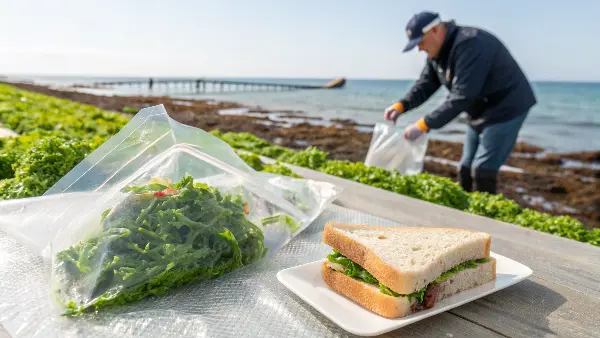
The first time I saw a sachet made from seaweed, I was blown away. It was for a powdered drink mix, and the instructions said to just drop the whole packet into water because the film itself would dissolve. This isn’t just a replacement for plastic; it’s a complete re-imagination of packaging. It removes waste from the equation entirely. For any business looking to make a bold statement about sustainability, seaweed-based materials offer an incredible opportunity.
How Is Packaging Made from the Ocean?
The technology leverages the natural polymers found in seaweed, like alginate and agar. These are extracted from harvested seaweed (often from sustainable kelp farms) and then processed into a liquid slurry. This slurry can then be cast into thin films that dry to form a plastic-like material. The properties—like thickness, flexibility, and even solubility—can be tweaked by adjusting the formulation and production process. Some variants are designed to be durable and water-resistant, while others are intentionally made to dissolve in water, making them perfect for single-dose products.
Is Seaweed the Right Fit for Your Products?
Deciding if seaweed packaging works for your business requires a close look at its unique characteristics. It’s a specialized material with amazing potential for specific uses.
| Feature | Advantages | Potential Challenges |
|---|---|---|
| Eco-Credentials | Made from a hyper-renewable resource; can be marine-degradable or home-compostable; low-impact cultivation. | Sourcing must be from sustainable aquaculture farms to avoid disrupting marine ecosystems. |
| Functionality | Can be made transparent, flexible, or rigid; some forms are edible or water-soluble; natural oxygen barrier. | Lower moisture barrier properties than traditional plastic, making it unsuitable for products needing a long shelf life in humid conditions. |
| Business Case | Offers a powerful and unique marketing story; appeals to highly eco-conscious consumers; potential to eliminate waste entirely. | Currently a niche, premium material with higher costs and limited supplier availability compared to conventional plastics or even PLA. |
Seaweed packaging is ideal for single-use sachets (sauces, coffee), food wraps for short-shelf-life items, and edible films for food products. It’s a premium choice that showcases a deep commitment to cutting-edge sustainability.
Are Corn and Sugarcane Based PLA Composites the Future of Food Packaging Solutions?
PLA (Polylactic Acid) has become a workhorse in the eco-friendly packaging world. Made from cornstarch or sugarcane, it’s compostable and versatile. But standard PLA has limitations—it can be brittle and has a low tolerance for heat. I’ve had clients tell me they love the idea of PLA but need something stronger or suitable for hot foods.
Yes, advanced PLA composites are bridging this gap and represent the next evolution of plant-based plastics. By blending PLA with other bio-based materials like talc, wood fiber, or even coffee grounds, manufacturers can create enhanced materials. These composites, often called CPLA (Crystallized PLA), offer superior heat resistance, increased durability, and improved strength. This makes them suitable for a wider range of applications, including hot-beverage cup lids, durable cutlery, and microwavable containers—all while remaining commercially compostable.
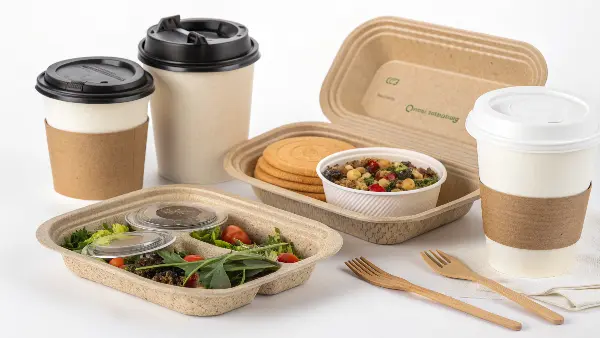
I was working with a coffee shop chain that wanted to switch to compostable lids, but standard PLA lids would warp from the heat of the steam. The moment we introduced them to CPLA lids, it was a breakthrough. They got the performance they needed without compromising their sustainability pledge. This is why composites are so important; they take a good material and make it great, opening up new possibilities for businesses to ditch conventional plastic for good.
How Do You Make a Better Bioplastic?
The process starts with standard PLA resin. To create a composite, this resin is blended with a reinforcing natural filler. For CPLA, the most common type, PLA is mixed with talc and undergoes a process that anneals it—or crystallizes its molecular structure. This simple-sounding change dramatically increases its thermal stability, raising its melting point from around 140°F (60°C) to over 185°F (85°C). For other composites, materials like finely ground wood flour or bamboo fiber are added to the PLA matrix to increase rigidity and strength, creating materials that feel more substantial and are less prone to breaking.
Choosing Between Standard PLA and a Composite
For a purchasing manager, understanding the trade-offs is key. While composites offer better performance, they also come with different considerations. Here’s a breakdown to help decide which is right for your needs.
| Factor | Standard PLA | PLA Composites (e.g., CPLA) |
|---|---|---|
| Heat Resistance | Low. Best for cold applications like cups, deli containers, and clear windows. | High. Suitable for hot cup lids, cutlery, soup containers, and some microwavable trays. |
| Durability | Can be brittle and crack under pressure (e.g., standard PLA cutlery). | Much stronger and more durable. CPLA cutlery, for instance, resists snapping. |
| Appearance | Typically transparent and glossy. | Usually opaque (white, black, or custom colors). The fillers give it a matte, premium finish. |
| Compostability | Commercially compostable. | Also commercially compostable. The natural additives do not hinder the process. |
| Cost | Generally the baseline cost for bioplastics. | A slight premium over standard PLA due to additional materials and processing steps. |
If you need packaging for cold items, standard PLA is a fantastic and cost-effective choice. But if your application involves heat, requires extra strength, or you want a premium matte finish, investing in a PLA composite like CPLA is absolutely the way to go.
Conclusion
The world of eco-friendly packaging is moving fast, far beyond the familiar territory of bamboo and bagasse. Materials like mycelium, seaweed, and advanced PLA composites are no longer futuristic concepts—they are becoming practical, scalable solutions. They offer businesses like yours new ways to innovate, reduce environmental impact, and tell a compelling story to your customers.
